





Bird and Woodpecker Damage to Exterior Trim: Repair or Replace?
Hearing tapping outside a window, or spotting fresh holes in your trim, usually means a bird has found something interesting in the wood. In Westport, Weston, and wooded parts of Fairfield County, CT, woodpecker damage to window casings, fascia, and corner boards is a common fall complaint.
The good news is that most trim damage can be fixed before it turns into a bigger repair. The key is understanding why the birds are there and how far the damage goes.
Why Birds Peck at Exterior Trim
Woodpeckers peck at homes for a few main reasons. They search for insects living in the wood, they drum on surfaces to mark territory, and some excavate holes for shelter, including roosting spots ahead of winter.
That first reason matters most to homeowners. Repeated pecking in one spot can be a sign of insects or soft, moisture-damaged wood behind the paint. Birds are often pointing you to a problem that was already there.
When Trim Can Be Repaired
If the wood around the holes is still solid, a repair is usually enough. Small and medium holes can be cleaned out, filled with an exterior-grade wood filler or epoxy, sanded smooth, then primed and painted to match. This approach works well for window casings and trim boards where the damage is limited to the surface.
When Trim Should Be Replaced
Replacement makes more sense when the wood feels soft, crumbles when probed, or shows wide areas of damage. Rotted trim will not hold filler or paint for long, and leaving it in place can let water reach the sheathing and framing behind it. Many homeowners choose PVC trim for replacements because it resists rot and insects and holds paint well. Learn more in our guide to damaged siding and wood rot.
Keeping Birds From Coming Back
Woodpeckers are protected under the federal Migratory Bird Treaty Act, so the goal is to discourage them, not harm them. Repairing damaged wood, sealing gaps, and fixing open vent covers remove the reasons birds visit. Visual deterrents like reflective tape can help in the meantime. Fresh paint after the repair also protects the wood from moisture.
Frequently Asked Questions
Why is a woodpecker pecking at my house?
A woodpecker is usually pecking your house to find insects, to drum and mark its territory, or to make a hole for shelter. Siding and trim that sound hollow or contain insect larvae are especially attractive. If the bird keeps returning to the same spot, have the wood checked for insects or moisture damage.
Does woodpecker damage mean my trim is rotted?
Not always, but it is worth checking. Birds sometimes peck at solid wood simply to drum. However, insects tend to live in soft or damp wood, and woodpeckers follow insects. Pressing the area with a screwdriver is a quick test. If the wood feels soft or crumbles, rot is likely and replacement is the better fix.
Can woodpecker holes in trim be filled?
Yes, woodpecker holes can be filled when the surrounding wood is still solid. The holes are cleaned out, packed with exterior wood filler or epoxy, sanded flush, and then primed and painted. Done properly, the repair blends in and seals the wood against moisture. Large or numerous holes may call for replacing the board instead.
Is PVC trim better than wood for replacing damaged trim?
PVC trim is a popular choice for replacement because it does not rot and insects do not live in it, which gives woodpeckers less reason to visit. It can be cut and installed much like wood and takes paint well. Some homeowners prefer wood to match existing trim, so the best choice depends on the home and its style.
Is it legal to get rid of woodpeckers?
Woodpeckers are protected under the federal Migratory Bird Treaty Act, so harming or killing them is illegal without a permit. Homeowners can use humane deterrents instead, such as reflective tape or other visual scare devices. Repairing damaged wood and removing insect activity are the most lasting ways to keep birds away.
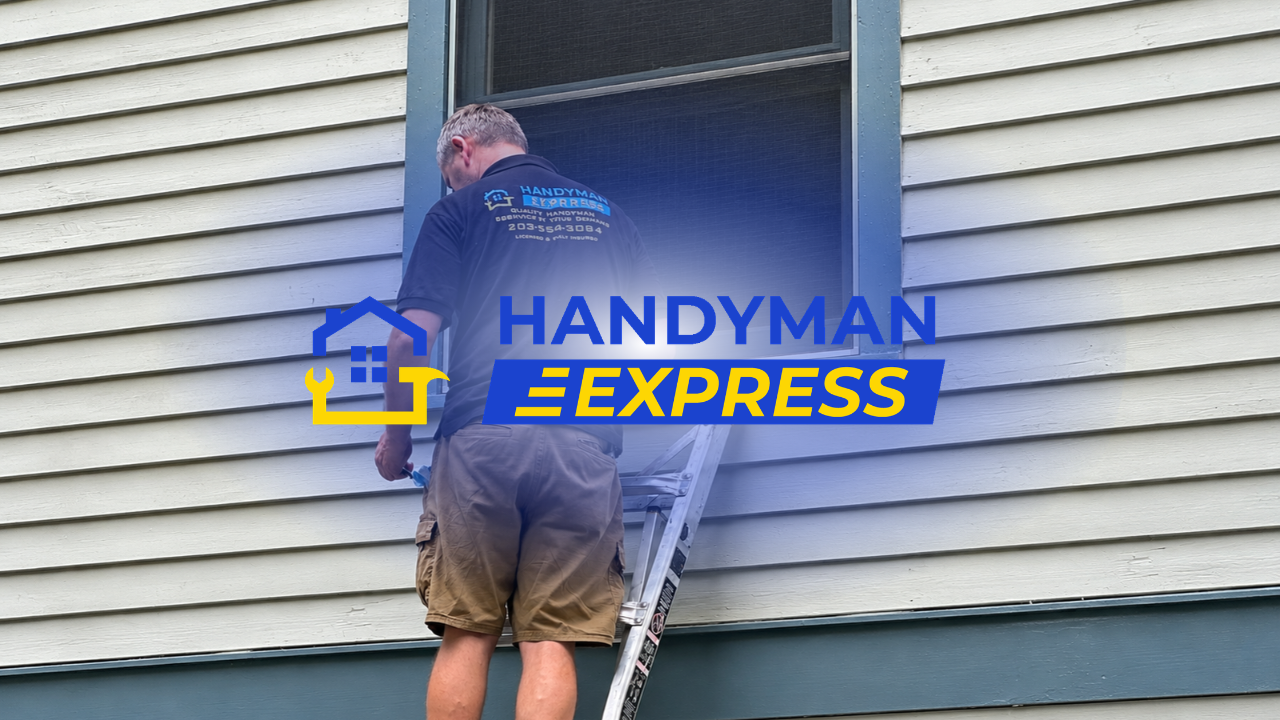
Handyman Express handles trim repair around windows and doors, including second-story work. See our door and window repair and painting services, then send us photos of the damage or call (203) 550-3084 for a quote.