





Drywall Holes, Cracks, and Dents: When to Patch vs. Replace
Almost every home picks up drywall damage over time — a doorknob dent, a nail-pop crack, a hole from removing a shelf, or water staining from a past leak. The question homeowners in Westport and across Fairfield County ask most is whether the damage needs a simple patch or a full section replacement. The answer comes down to size, location, and what caused it. Here is how to tell the difference and what a professional repair involves.
1. Small Damage: When a Patch Is Enough
Most everyday drywall damage is cosmetic and easily patched. Small nail holes, hairline cracks, and minor dents can be filled, sanded, and painted so the wall looks untouched. Slightly larger holes — up to a few inches, like those left by a doorknob — are repaired with a patch and joint compound, then feathered out and finished to blend seamlessly with the surrounding wall.
The key to an invisible patch is the finishing work: proper taping, multiple thin coats of compound, careful sanding, and matching the wall's texture and paint. This is where a professional result clearly outperforms a quick DIY fill that leaves a visible bump or ridge.
Common Patch-Friendly Damage
Think nail and screw holes, anchor holes from removed shelves or art, doorknob dents, hairline settlement cracks, and small dings in high-traffic hallways. These are routine repairs that restore a smooth, paint-ready surface.
2. Larger Damage: When Replacement Makes Sense
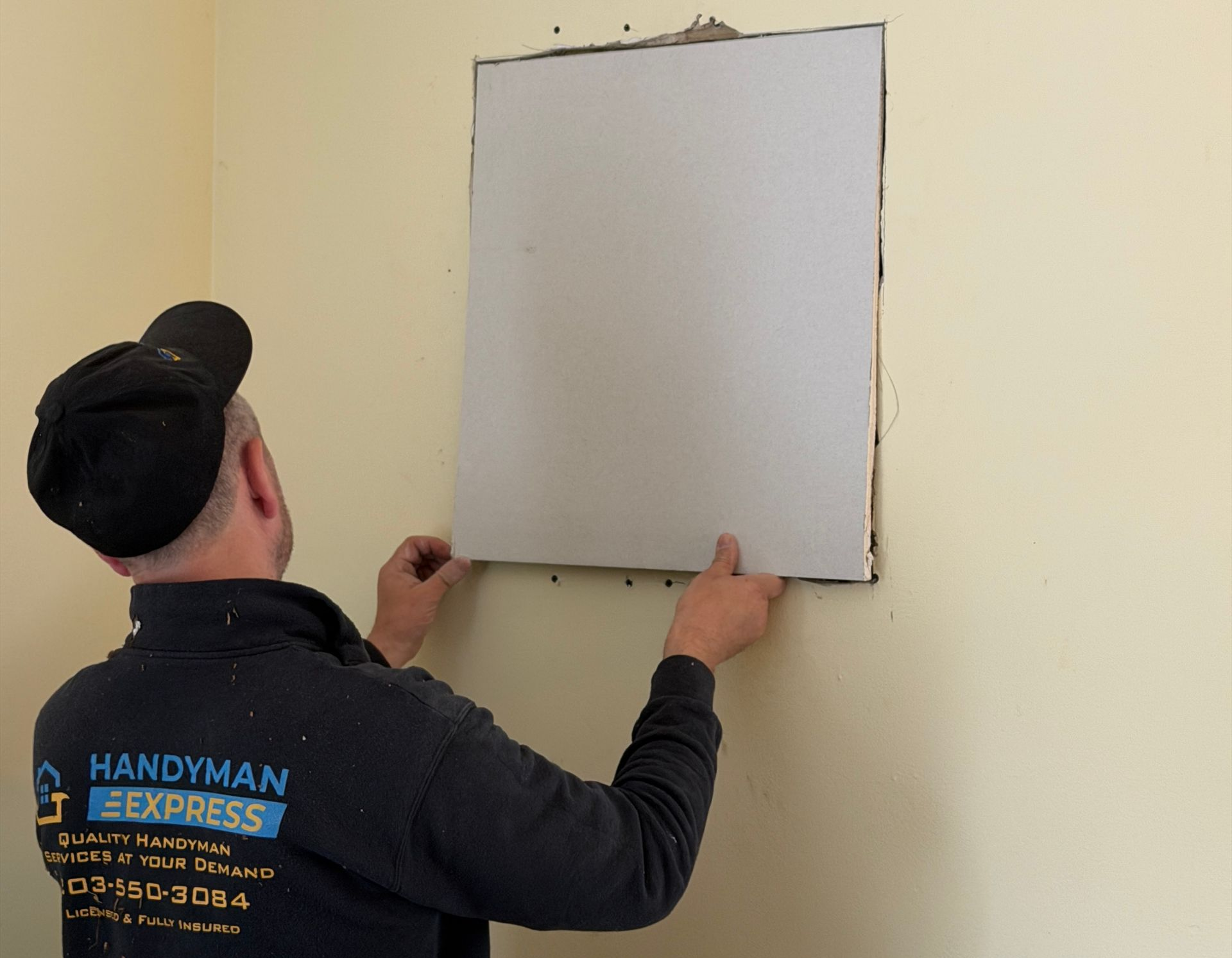
Bigger holes, sagging sections, or damage spanning a wide area usually call for cutting out the affected drywall and installing a new piece. This involves squaring off the damaged area, securing a fresh panel to the studs, taping the seams, and finishing the surface so the repair disappears. Replacement is the right call when a patch would be too large to stay structurally sound or blend cleanly.
Water Damage Is a Special Case
Drywall that has been wet — from a roof leak, plumbing issue, or condensation — often needs replacement rather than patching. Wet drywall loses strength, can harbor mold, and rarely returns to a sound surface. The source of the moisture should always be addressed first so the new drywall stays dry.
Matching Texture and Paint
Whether patched or replaced, matching the existing wall texture and paint is what makes a repair truly invisible. A handyman blends the finish so you can't tell where the work was done.
3. Why Hire a Handyman for Drywall
Drywall finishing is deceptively skilled work — the difference between a flawless wall and an obvious patch is all in the technique. A handyman handles the full process, from cutting and patching to taping, sanding, texturing, and painting. Drywall repairs are also a natural fit alongside other small jobs, so they pair well with a broader punch-list visit. You can also learn which home repairs are best suited for a professional handyman.
Conclusion
Whether your drywall needs a quick patch or a full section replaced comes down to the size, location, and cause of the damage — with water damage almost always calling for replacement. Either way, the finishing work is what makes the repair disappear. If you have drywall holes, cracks, or dents in your Westport or Fairfield County home, Handyman Express LLC can restore a smooth, like-new wall.
Frequently Asked Questions
Can a small hole or crack be patched so it's invisible?
Yes. Nail holes, hairline cracks, and doorknob dents are filled, sanded, textured, and painted to blend with the surrounding wall.
When does drywall need to be replaced instead of patched?
Large holes, sagging sections, or wide damage call for cutting out and replacing the affected area so the repair stays sound and seamless.
Do you fix water-damaged drywall?
Yes. Wet drywall usually needs replacement rather than patching, and we recommend addressing the moisture source first so the new drywall stays dry.
Will you match the existing texture and paint?
Yes. Matching wall texture and paint is what makes the repair disappear, and it's part of the finishing work.
Ready to make that wall look new again? Call Handyman Express LLC at (203) 550-3084 or reach out through our website to schedule your drywall repair.